
Electrical Terminals: Key Takeaways
- Electrical terminals affect reliability: Connection quality impacts conductivity, heat buildup, and long-term performance
- Different terminal types serve different needs: Ring, spade, butt, and terminal blocks are designed for specific applications and environments
- Materials and installation matter: Proper plating, insulation, and connection quality help reduce corrosion and resistance issues
- Choosing the right terminal reduces failures: Correct terminal selection improves safety, maintenance efficiency, and system stability
Electrical failures are often traced back not to the wire itself, but to the terminal connection point where current is transferred. Even small increases in contact resistance can generate heat, reduce efficiency, and eventually lead to system failure.
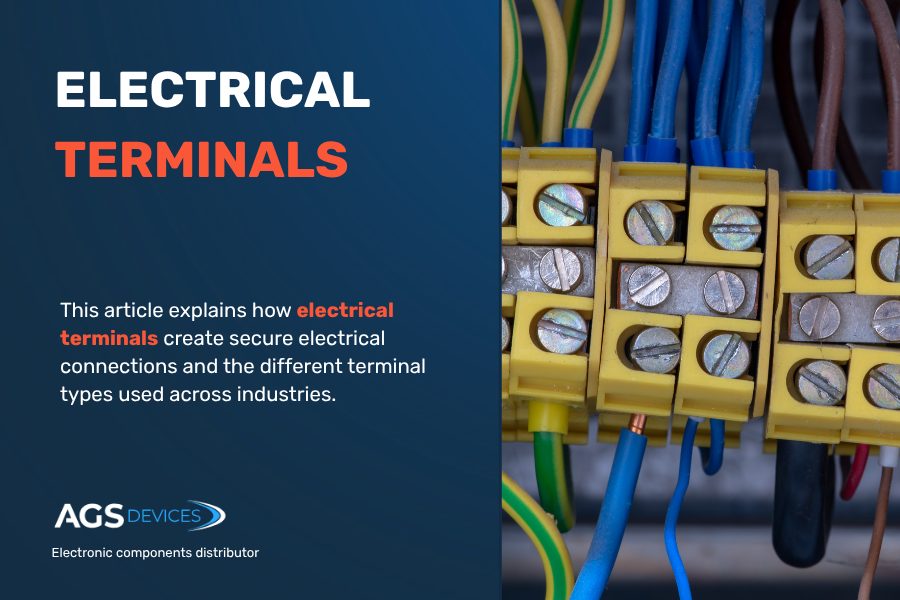
Electrical terminals are essential components that create secure, conductive connections between wires, circuits, and electrical devices.
From industrial control systems and automotive wiring harnesses to consumer electronics and power distribution equipment, terminals play a critical role in maintaining safe and reliable electrical continuity.
For engineers, terminal selection directly impacts conductivity, thermal performance, and system longevity.
For technicians and electricians, proper installation determines whether a connection remains stable under vibration, load, and environmental stress.
In this guide, we’ll cover:
- What are terminals and their functions
- Common types of electrical terminals and their functions
- How terminals work within electrical circuits
- Materials and design considerations
What Do Electrical Terminals Actually Do?
Electrical terminals are the connection points that allow current to move safely and reliably between wires, components, and circuits.
While they are small, they play a major role in system performance, ensuring electrical continuity while keeping connections secure under mechanical and environmental stress.
You’ll find terminals in nearly every electrical system, from industrial control panels and automotive harnesses to consumer electronics and power distribution equipment.
Their purpose is not just to connect conductors, but to create a stable interface that minimizes resistance, heat buildup, and connection failure over time.
In most systems, terminals are used to:
- Establish secure electrical continuity
- Support safe wire termination and organization
- Simplify maintenance, replacement, and troubleshooting
Different terminal types are designed for different applications, current loads, and operating conditions.
Depending on the system, you’ll typically see:
- Ring terminals: Secure connections in high-vibration environments
- Spade terminals: Faster installation and removal
- Butt connectors: Wire-to-wire splicing
- Terminal blocks: Organized multi-wire connections
Key insight: Electrical terminals may seem simple, but their design and installation directly influence electrical resistance, heat generation, and long-term system reliability.

How Electrical Terminals Work
Electrical terminals work by creating a low-resistance connection point between conductors, allowing current to flow safely and efficiently through a circuit. To do this effectively, a terminal must maintain both strong electrical contact and mechanical stability over time.
Most terminals operate by compressing or securing a wire against a conductive surface using crimping, screws, soldering, or spring pressure. This connection minimizes resistance while preventing movement that could weaken conductivity.
A reliable terminal connection depends on several factors:
- Contact quality: Poor contact increases resistance and heat buildup
- Mechanical pressure: Proper compression keeps the connection stable
- Conductive materials: Copper and plated metals improve current transfer
- Environmental protection: Insulation and coatings reduce corrosion risk
One of the most common connection methods is crimping, where a terminal is mechanically compressed onto a wire. When done correctly, crimping creates a gas-tight connection that resists vibration and oxidation. Poor crimping, however, can lead to loose connections, voltage drops, and overheating.
For example, in automotive systems, improperly secured terminals can create intermittent electrical faults that are difficult to diagnose because vibration continuously affects contact stability.
In practice, even small connection imperfections can affect heat generation, resistance, and long-term reliability.
How Materials and Applications Impact Electrical Terminal Performance
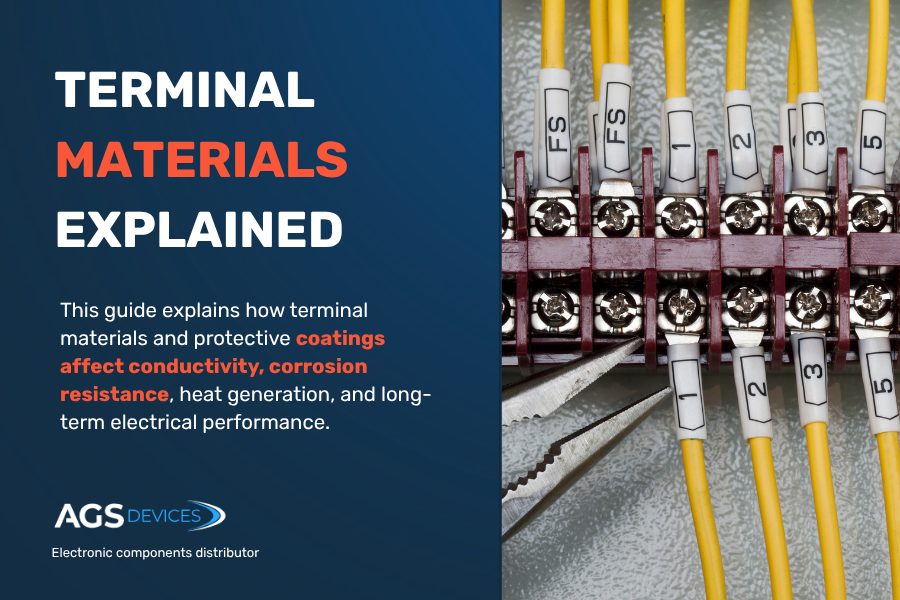
The performance of an electrical terminal depends heavily on its materials, protective coatings, and overall design. A terminal must not only conduct current efficiently, but also withstand heat, vibration, corrosion, and long-term mechanical stress in real-world operating environments.
Material selection plays a major role in terminal performance. Copper is the industry standard due to its excellent electrical conductivity, making it ideal for efficient current transfer.
Brass, while less conductive, offers greater mechanical strength and durability, which is valuable in applications exposed to repeated movement or stress.
Protective coatings become especially important in environments such as:
- Tin plating: Cost-effective and resistant to corrosion
- Gold plating: Highly reliable with low oxidation and stable conductivity
- Specialized coatings: Used in harsh or high-moisture environments
Insulation and environmental protection are equally important, especially in demanding systems where exposure can degrade performance over time.
Common protection methods include:
- PVC insulation for general-purpose protection
- Heat-shrink tubing for sealing and strain relief
- Environmental sealing for moisture and contamination resistance
Beyond materials, terminal design must account for several operating conditions:
- Current rating and load capacity
- Temperature tolerance under continuous operation
- Resistance to vibration and mechanical stress
- Corrosion protection in harsh environments
In many systems, high-resistance connections generate localized heat long before visible failure appears.
Reliable terminal connections are required across virtually every industry where reliable current is needed. However, application demands can vary significantly depending on the operating environment.
Common industry applications include:
- Automotive systems: Battery connections and wiring harnesses exposed to vibration and temperature changes
- Industrial automation: PLC systems, control cabinets, and machinery wiring
- Consumer electronics: Compact internal wiring and PCB connectivity
- Aerospace systems: High-reliability electrical connections in extreme operating conditions
- Energy and utilities: Power distribution equipment and electrical infrastructure
In these environments, terminal reliability becomes increasingly important under:
- High-vibration conditions
- High-current electrical loads
- Safety-critical operating environments
The harsher the application, the more important proper material selection, plating, insulation, and terminal design become for ensuring long-term electrical stability and system reliability.
Choosing the Right Electrical Terminal
Selecting the right electrical terminal is critical for ensuring safe operation, reliable conductivity, and long-term system performance.
Wire compatibility is usually the starting point during terminal selection.
The terminal must match the correct wire gauge to maintain proper contact pressure and minimize resistance. At the same time, the terminal’s current rating should align with the electrical load to prevent overheating and voltage drop during operation.
Environmental conditions also play a major role in terminal performance. Systems exposed to moisture, chemicals, vibration, or temperature fluctuations require terminals with appropriate insulation, sealing, and corrosion-resistant plating to maintain reliability over time.
Mechanical fit is equally important. The terminal must integrate securely with connectors, studs, terminal blocks, or other connection interfaces without creating unnecessary stress on the conductor.
When selecting electrical terminals:
- Choose terminals rated for the specific application and load requirements
- Verify compatibility with wires, connectors, and mounting systems
- Use corrosion-resistant materials in harsh operating environments

Reliable Electrical Terminal Solutions from AGS Devices
Electrical terminals may be small components, but they play a critical role in ensuring safe current transfer, stable connections, and long-term system reliability.
From industrial automation and automotive systems to energy infrastructure and electronics, selecting the right terminal directly impacts performance, maintenance requirements, and operational safety.
At AGS Devices, we help customers source electrical terminals that meet both technical specifications and real-world operating demands.
Whether you need standard terminal solutions or hard-to-find components for specialized applications, our team provides access to reliable, fully traceable parts backed by global sourcing expertise.
We support your terminal sourcing needs with:
- Global sourcing network: Access to trusted manufacturers and suppliers
- Certified components: Quality-tested and fully traceable terminals
- Hard-to-find parts: Support for obsolete and supply-constrained components
- BOM optimization: Simplify procurement and reduce sourcing complexity
- Quality assurance: Components selected for reliability and long-term performance
By combining technical insight with sourcing support, AGS Devices helps you reduce connection failures, improve system reliability, and maintain consistent performance across critical applications.
What Are Terminals: FAQs
If you’re still wondering what are terminals, you might find some additional answers here.
What are electrical terminals?
Electrical terminals are conductive connection points used to join wires, components, or circuits within an electrical system. They provide secure electrical continuity while allowing easier installation, maintenance, and replacement.
What is a terminal in electricity?
In electricity, a terminal is the point where electrical current enters or exits a component, wire, or device. Terminals create the interface needed for safe and reliable current transfer.
What are terminals in a circuit?
Terminals in a circuit are connection points that link electrical conductors and components together. They help complete the electrical pathway and maintain stable current flow throughout the system.
What is the difference between connectors and terminals?
A terminal is the conductive endpoint that establishes electrical contact, while a connector is the complete assembly that joins two or more circuits together. Terminals are often housed inside connectors.
What are terminal blocks used for?
Terminal blocks are used to organize and secure multiple wire connections within electrical systems. They are commonly found in industrial control panels, power distribution equipment, and automation systems.
How do electrical terminals work?
Electrical terminals work by creating a low-resistance conductive connection between wires or components. Proper contact pressure and material quality help ensure efficient current transfer and long-term reliability.
What causes electrical terminal failure?
Terminal failures are commonly caused by loose connections, corrosion, overheating, vibration, or improper installation. These issues can increase resistance and generate heat, eventually leading to electrical faults.
Why is terminal material important?
Terminal material directly affects conductivity, corrosion resistance, and mechanical strength. Copper is commonly used for conductivity, while plating materials like tin or gold improve durability and long-term performance.
How do you choose the right electrical terminal?
Choosing the right terminal depends on wire size, current requirements, operating environment, and application type. It’s important to select terminals rated for the correct electrical load and environmental conditions.
How does AGS Devices support electrical terminal sourcing?
AGS Devices provides access to trusted global suppliers, helping customers source high-quality electrical terminals that meet performance, compliance, and reliability requirements across industries.
Can AGS Devices help source hard-to-find terminals?
Yes, AGS Devices specializes in sourcing obsolete, allocation-constrained, and hard-to-find electrical terminals, helping customers reduce downtime and maintain production continuity.