
What Is an Interconnect: Key Takeaways
- Interconnects define system performance: They directly impact signal quality, latency, and power stability
- Weak connections = hidden failures: Many reliability issues originate from poor contact, wear, or interference
- Material selection is strategic: Conductors and plating influence efficiency, durability, and corrosion resistance
- Sourcing impacts uptime: The right supplier helps avoid shortages, obsolescence, and production delays
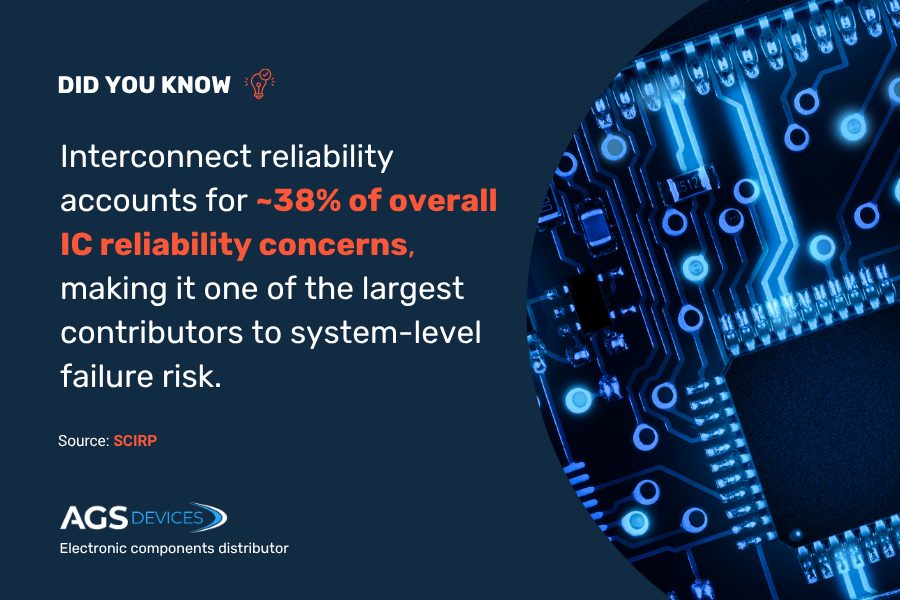
Up to 50%-70% of electronic system failures are linked to interconnect issues, not the components themselves, making them one of the most critical factors in overall system reliability.
Most systems don’t fail because a chip stops working, they fail because something in between doesn’t work properly.
Interconnects sit in that “in-between.” They carry signals, deliver power, and quietly determine whether a system runs smoothly or becomes unreliable over time.
In this guide, we’ll cover:
- What interconnects do with core functions and roles
- Types of interconnectors, such as connectors, cables, PCB, chip-level
- Materials and how they affect conductivity, plating, and insulation
- Reliability of interconnectors in various environments
- How to choose and source the right interconnect
Interconnects in Electronics: Key Facts & Functions
Interconnects in electronics are physical pathways that enable electrical signals and power to travel between components. They form the essential links that allow individual parts to function as a complete system.
They exist at every level of electronic design:
- Chip-to-chip: Internal IC connections
- Board-to-board: PCB-level communication
- System-to-system: External cables and connectors
Interconnects include a wide range of components:
- Connectors: Plugs, sockets, modular interfaces
- Cables: Coaxial, ribbon, wire harnesses
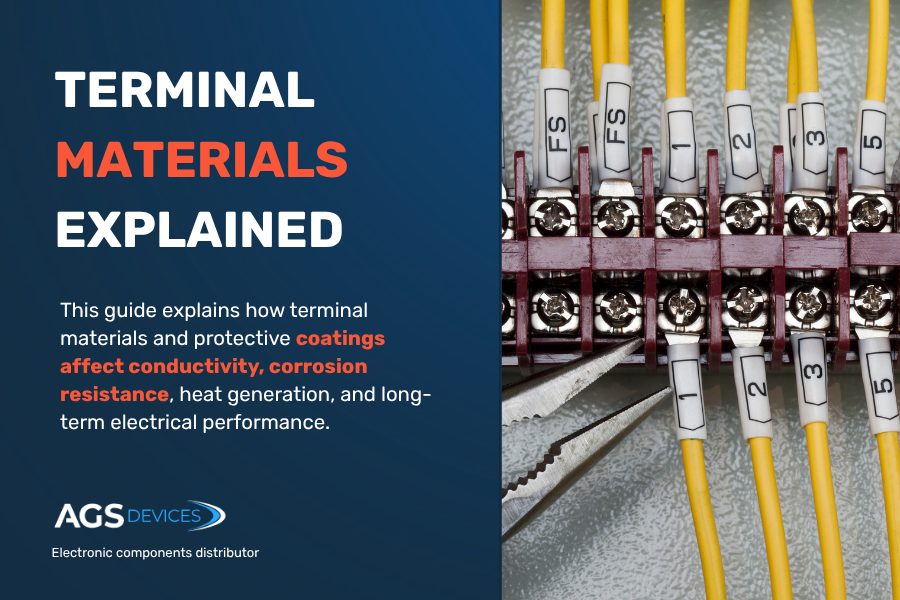
- Terminals: Crimp, solder, press-fit
- PCB elements: Traces, vias, pads
What Do Interconnects Do?
At a basic level, they’re doing a few jobs at once, and none of them are optional:
- Signal transmission: Data, RF, and high-speed digital signals
- Power delivery: Distribute voltage and current across circuits
- Mechanical connection: Enable modular assembly and maintenance
- Grounding and shielding: Reduce noise and improve safety
Types of Electronic Interconnects
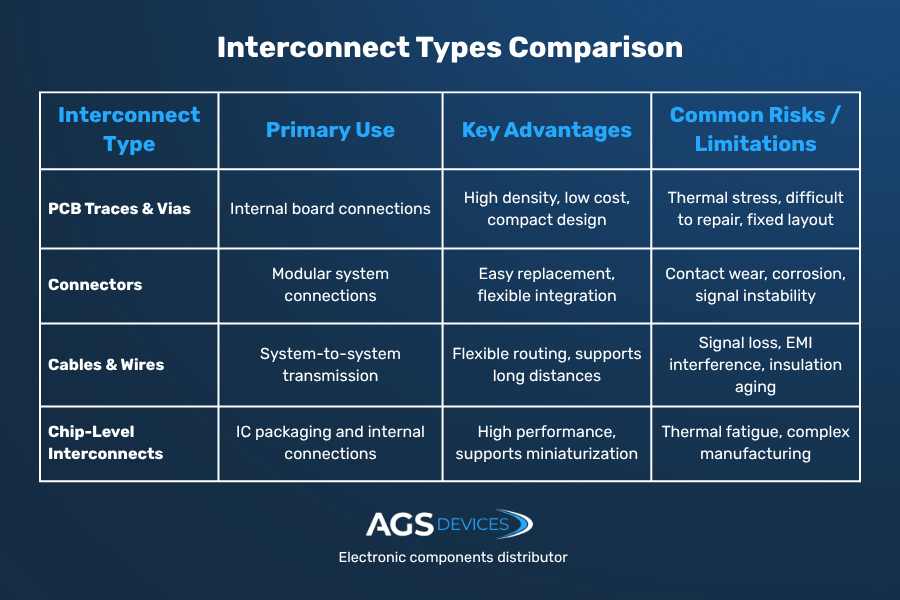
Electronic interconnects come in multiple forms, each designed for specific electrical, mechanical, and environmental requirements. They include:
Board-Level Interconnects
Used within printed circuit boards (PCBs) to connect components internally:
- PCB traces: Conductive pathways for signals and power
- Vias: Vertical connections between PCB layers
- Edge connectors: Interface points for board expansion
- Solder joints and pads: Permanent electrical connections
Use case: Compact, high-density circuit design in consumer and industrial electronics
Cable & Wire Interconnects
Designed for flexible and longer-distance connections between components or systems:
- Ribbon cables: Flat, space-efficient wiring
- Coaxial cables: Shielded for high-frequency signals
- Wire harnesses: Bundled wires for organized routing
Use case: Data transmission and power delivery across subsystems
Connectors & Terminals
Enable modular, replaceable, and secure connections:
- Interconnect terminals: Crimp, solder, press-fit types
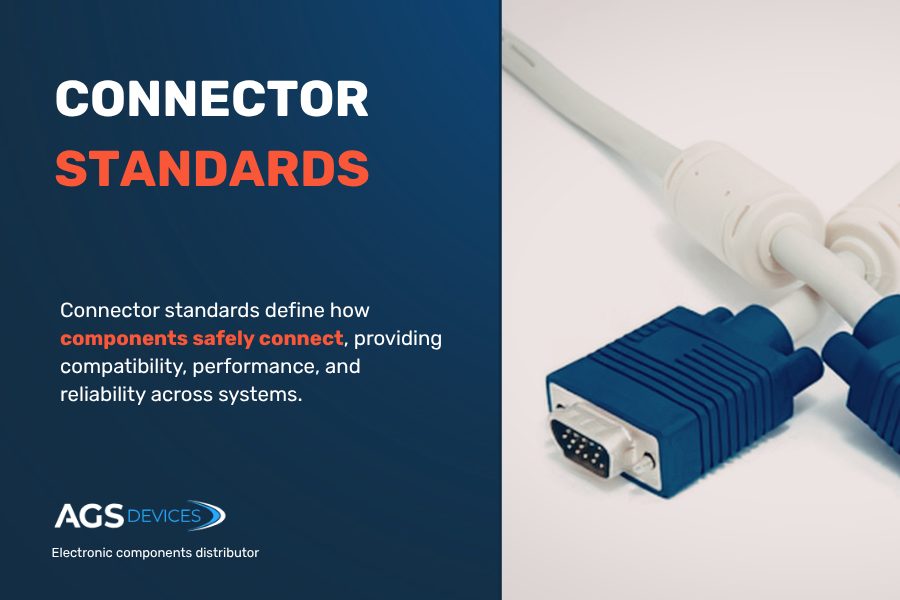
- Connectors: Plugs, sockets, board-to-board interfaces
- Contacts: Ensure stable electrical continuity
Use case: Systems requiring easy assembly, maintenance, or upgrades
Chip-Level Interconnects
Operate inside semiconductor devices for high-density integration:
- Wire bonding: Fine wires connecting die to package
- Flip-chip interconnects: Direct die-to-substrate connections
- TSV (Through-Silicon Via): Vertical stacking for advanced ICs
Use case: High-performance computing, miniaturized electronics
Backplane & System Interconnects
Support large-scale and high-speed system architectures:
- Backplanes: Central boards connecting multiple modules
- Rack systems: Server and telecom infrastructure
- High-speed interfaces: Data center and networking systems
Use case: Aerospace, defense, telecom, and data center environments
How Interconnects Enable Signal and Power Transmission
Interconnects don’t just carry electricity, they control how efficiently signals and power move through a system. Their design directly impacts performance, stability, and reliability.
Electrical Fundamentals
Interconnects rely on conductive materials to carry current with minimal resistance. Lower resistance reduces energy loss and heat, helping maintain stable voltage across components.
Signal Integrity Factors
Once you move into higher speeds, things stop behaving nicely. Signals reflect, interfere, and degrade faster than most designs expect.
Impedance mismatches can cause reflections, while crosstalk introduces interference. Signal attenuation weakens signals over distance, especially in poorly designed layouts.
High-Speed & High-Frequency Considerations
In high-speed systems, interconnects behave like transmission lines. Controlled impedance ensures signals travel cleanly, reducing timing errors and data loss in applications like servers and telecom.
EMI Shielding & Noise Reduction
Shielding and grounding protect signals from electromagnetic interference. Without proper protection, noise can disrupt performance and lead to system instability.
Materials Used in Electronic Interconnects
Materials are where performance decisions quietly become long-term consequences. The right combination ensures efficient transmission and long-term reliability.
Conductive Materials
The core of any interconnect is its conductor:
- Copper: High conductivity, widely used across all applications
- Aluminum: Lightweight option for weight-sensitive designs
These materials determine how efficiently current flows through the system.
Plating Materials
Plating improves durability and contact performance:
- Gold: Excellent corrosion resistance and long-term reliability
- Nickel: Acts as a barrier layer to prevent material diffusion
Plating is especially important in connectors exposed to harsh conditions.
Insulation & Dielectrics
Insulating materials protect and stabilize interconnects:
- PTFE: High temperature and chemical resistance
- PVC: Cost-effective and widely used
- Kapton: Ideal for extreme thermal environments
Their role is to provide electrical isolation and thermal stability.
Why Material Selection Matters
Change the material, and you change how the system ages, not just how it performs on day one.
Materials can affect:
- Signal loss: Poor materials increase resistance and degradation
- Durability: Impacts wear, corrosion, and lifespan
- Environmental resistance: Determines performance under heat, moisture, and vibration
Did you know? Gold-plated connectors can last longer in corrosive environments than unplated alternatives.
How to Choose the Right Interconnect for Your Application
Choosing an interconnect isn’t just a spec-sheet exercise. It’s a tradeoff between performance, physical constraints, and what will still be available 18 months from now.
Align With Electrical Requirements
Start with how your system handles power and signals. Different applications demand different interconnect characteristics:
- High current: Requires low resistance to prevent heat buildup
- High-speed signals: Needs controlled impedance to avoid signal distortion
- Mixed signals (analog + digital): Demands careful isolation to reduce interference
Even small mismatches here can impact system performance immediately.
Fit the Mechanical Design
Interconnects must physically integrate into your system without creating stress points or limitations:
- Tight spaces: Use compact or high-density connectors
- Moving systems: Require flexible cables or strain relief
- Frequent connections: Need high mating cycle durability
This is where many real-world failures begin: mechanical fatigue over time.
Account for the Operating Environment
What works perfectly on a bench can fall apart fast in the real world. Temperature extremes can expand or degrade materials. Moisture and chemicals accelerate corrosion.
Constant vibration can loosen connections over time. This is why industries like aerospace and automotive rely on specialized interconnects built for harsh conditions.
Think Beyond Design and Plan for Supply
Even a technically perfect interconnect can create problems if it’s difficult to source. Long lead times delay production. Inconsistent suppliers introduce quality risks.
Components nearing obsolescence can force costly redesigns. Reliable sourcing and lifecycle visibility are essential for long-term stability.
Ultimately, selecting the right interconnect means balancing performance, physical design, environment, and supply chain reality, not treating them as separate decisions.
Why Source Interconnects from AGS Devices
Interconnects are not just supporting components, they directly determine signal integrity, power efficiency, and system reliability. From high-speed data transmission to harsh-environment applications, the right interconnect can prevent failures, reduce downtime, and extend product lifespan.
At AGS Devices, we understand that sourcing interconnects is about more than availability. It’s about performance, consistency, and long-term supply chain stability.
We support your projects with:
- Global sourcing network: Access to trusted, vetted suppliers worldwide
- Hard-to-find components: Including connectors, terminals, and specialized interconnects
- BOM optimization: Reduce cost, risk, and sourcing complexity
- Quality assurance: Fully traceable, tested components
- Obsolescence management: Avoid redesigns and production delays
Whether you’re designing for automotive, aerospace, industrial, or consumer electronics, AGS Devices helps ensure your interconnect strategy supports both performance and scalability.
Interconnects in Electronics: FAQs
What is an interconnect in electronics?
An interconnect in electronics is a physical pathway that enables electrical signals and power to travel between components. It can take many forms, including connectors, cables, PCB traces, and terminals, and is essential at every level of a system, from chip design to full system integration.
What is an interconnect cable?
An interconnect cable is used to carry signals or electrical power between devices or subsystems. These cables are designed for specific applications, such as high-speed data transfer or shielded communication, ensuring reliable performance over varying distances.
What does an interconnect do?
An interconnect allows components within an electronic system to communicate and function together. It ensures that signals are transmitted accurately, power is distributed efficiently, and interference is minimized, all of which are critical for overall system performance.
What are interconnect terminals?
Interconnect terminals are connection points that join wires to components or other conductors. They are designed to provide secure and stable electrical contact and are commonly used in applications where durability and reliability are essential, such as automotive and industrial systems.
What is interconnect electronics?
Interconnect electronics refers to the complete network of connections within an electronic system. It includes all the physical links, such as connectors, cables, and PCB pathways, that enable components to work together as a unified and functional device.
Why choose AGS Devices for interconnect sourcing?
AGS Devices provides reliable access to high-quality interconnects through a global network of vetted suppliers. In addition to sourcing standard and hard-to-find connectors, cables, and terminals, AGS offers BOM optimization, quality assurance, and obsolescence management to help ensure consistent supply and long-term reliability for your projects.