
Connector Issues: Key Takeaways
- Connector issues are often hidden: Failures typically appear as intermittent faults, making them difficult to diagnose and easy to overlook
- Degradation is cumulative: Corrosion, wear, and electrical stress gradually reduce performance before causing system-level failures
- Small problems have big impact: Minor connector faults can lead to signal loss, downtime, and costly troubleshooting
- Prevention is more effective than repair: Proper selection, maintenance, and sourcing significantly reduce failure risk and long-term costs
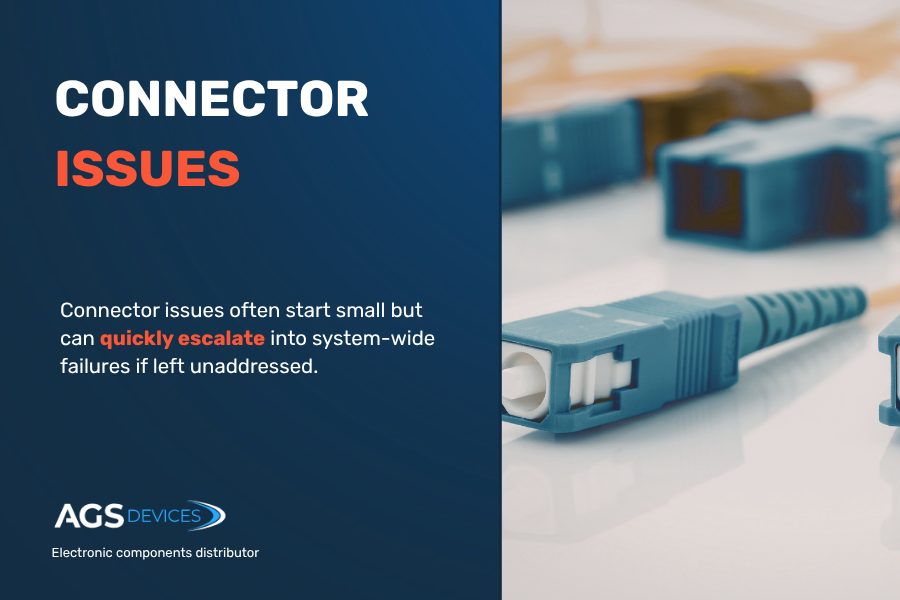
Connector issues come up more often than expected and they’re usually harder to track down than component failures.
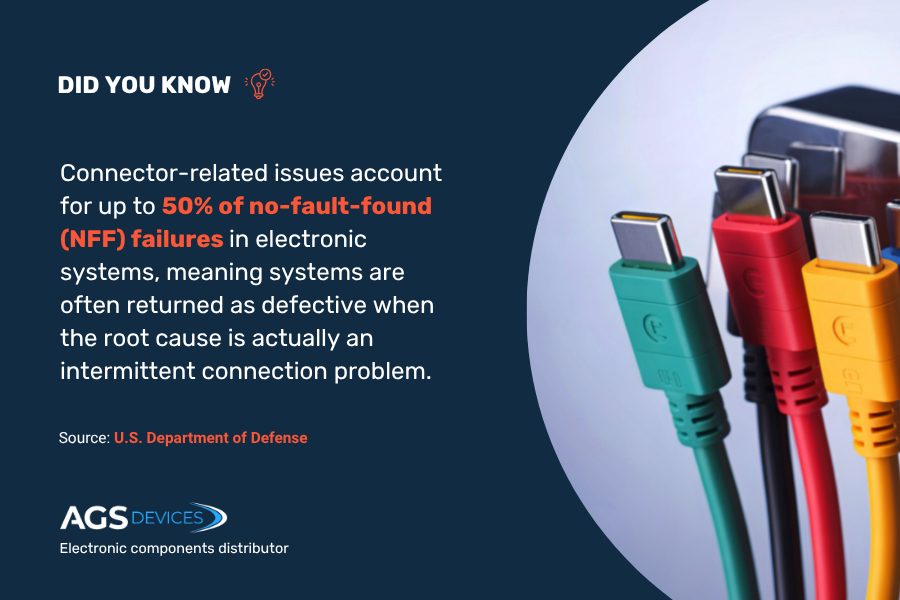
Electrical interconnect failures account for a significant share of system reliability issues, with some studies attributing up to 40%–50% of failures to connection-related problems.
In real-world environments, these issues rarely appear as immediate failures. Instead, they develop gradually as signal loss, unstable connections, or intermittent faults, making root cause analysis more difficult.
From a design standpoint, connector failures affect signal integrity and power delivery.
On the maintenance side, they lead to time-consuming troubleshooting.
And when sourcing isn’t consistent, the same issues tend to repeat.
Here’s what tends to matter most when dealing with connector issues:
- The most common connector issues and their root causes
- How to identify and troubleshoot failures quickly
- Environmental and mechanical factors that accelerate damage
- Practical strategies to prevent connector-related failures
Common Connector Issues in Electronic Systems
Connector failures rarely happen all at once. Instead, they develop gradually, often starting as minor inconsistencies before turning into system-level issues.
The reason they fail more often than expected is simple: They are exposed to mechanical stress, environmental factors, and electrical load simultaneously.
Compared to active components, connector problems are harder to spot because they don’t always fail in a consistent way.
Most issues tend to show up in a few familiar ways:
- Loose or intermittent connections: Caused by poor mating, vibration, or wear over time
- Corrosion and contamination: Resulting from moisture, dust, or chemical exposure
- Mechanical wear and fatigue: From repeated mating cycles or physical stress
- Overheating and electrical stress: Due to excessive current or poor contact resistance
These issues often overlap, accelerating failure if not addressed early.
In practice, connector problems rarely show clear failures as they tend to appear as intermittent faults instead.
Signal Loss and Intermittent Connections
Signal loss and intermittent connections are among the most common and most difficult connector issues to diagnose. Unlike complete failures, these problems appear inconsistently, making systems unreliable without an obvious root cause.
They typically originate from small physical or electrical imperfections that worsen over time. Common causes include:
- Poor contact alignment: Misaligned pins or connectors reduce contact efficiency
- Worn contacts: Repeated use degrades conductive surfaces
- Loose connections: Incomplete mating or weak locking mechanisms
- Vibration: Movement disrupts contact stability, especially in dynamic environments
These issues often present subtle but disruptive symptoms:
- Flickering or unstable signals
- Data transmission errors
- Unexpected system resets or instability
Because the failure isn’t consistent, troubleshooting usually takes a more methodical approach than expected.
Inspect for visible wear, deformation, or contamination. Then test electrical continuity and resistance to identify weak or inconsistent contact points.
Example: In network infrastructure, a partially worn Ethernet connector can cause intermittent connectivity, leading to dropped packets and unstable performance, issues that are often mistaken for software or network faults.
Connector Degradation: Corrosion, Wear, and Electrical Stress
Connector failures are rarely caused by a single issue. In most cases, they result from a combination of environmental exposure, mechanical wear, and electrical stress, all of which degrade performance over time.
One of the most critical risks is corrosion, especially in environments exposed to moisture, chemicals, or air pollutants. Corrosion increases contact resistance, weakens conductivity, and in severe cases, can create unintended conductive paths.
- Moisture and humidity accelerate oxidation
- Chemical exposure damages contact surfaces
- Long-term oxidation degrades conductivity
Can corrosion cause a short?
Yes. In advanced stages, corrosion can create unintended electrical bridges, leading to short circuits in sensitive systems.
Mechanical wear is another major contributor to connector failure. Over time, repeated use and physical stress degrade both contacts and housing structures.
- Repeated mating cycles wear down contact surfaces
- Vibration loosens connections and reduces contact stability
- Improper handling can cause bent pins or cracked housings
These issues often appear first as intermittent faults before progressing to full failure.
Electrical stress adds another layer of risk. When connectors are pushed beyond their rated limits, heat buildup and resistance can accelerate degradation.
- Excess current increases temperature at contact points
- Poor contact resistance leads to localized heating
- Underrated connectors may deform or fail under load
The result can include melting, increased resistance, or complete system failure.
How to Reduce Connector Degradation
Avoiding these issues usually comes down to a mix of design choices and basic protection steps:
- Use sealed connectors in harsh environments
- Apply protective coatings or choose corrosion-resistant plating (e.g., gold)
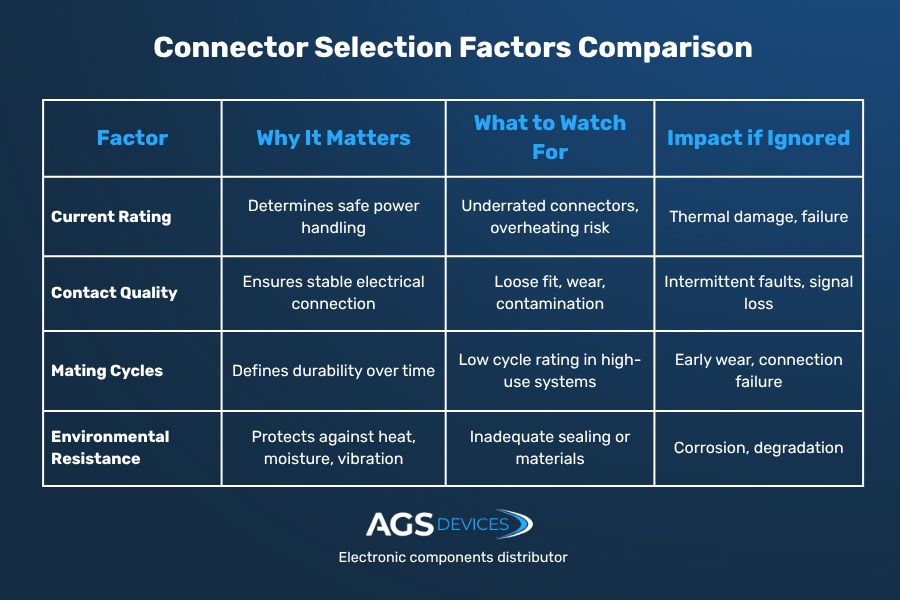
- Match connector ratings to electrical load
- Minimize unnecessary mating cycles and mechanical stress
Connector Maintenance and Inspection Tips
Connector reliability doesn’t end at design, it depends heavily on consistent maintenance and inspection practices. Many connector issues can be prevented early with routine checks, reducing the risk of unexpected failures and costly downtime.
A structured maintenance approach should include regular inspection intervals, proper cleaning methods, and basic electrical testing. These steps help identify early signs of degradation before they impact system performance.
Key maintenance practices include:
- Inspect for corrosion and wear: Look for discoloration, oxidation, or physical damage
- Clean contacts properly: Use appropriate, non-abrasive cleaning solutions to remove contaminants
- Check for secure connections: Ensure connectors are fully seated and locking mechanisms are intact
- Replace worn connectors early: Avoid waiting for complete failure, especially in critical systems
In addition to visual inspection, periodic testing such as continuity or resistance checks can help detect hidden issues that aren’t immediately visible.
Key insight: Preventive maintenance is often significantly more cost-effective than troubleshooting failures after they occur, especially in systems where downtime impacts operations or safety.
Prevent Connector Failures with AGS Devices
Troubleshooting connector issues is essential, but preventing them is where real value is created. From corrosion and wear to signal instability and overheating, most connector failures can be traced back to poor component selection, inconsistent quality, or inadequate sourcing strategies.
That’s where AGS Devices supports teams: by helping provide connectors that are reliable, consistent, and suited to real-world conditions.
Whether you’re dealing with intermittent faults or designing for high-reliability environments, our team provides the support needed to minimize risk from the start.
We support your connector needs with:
- Global sourcing network: Access to vetted, high-quality connector suppliers
- Hard-to-find components: Including obsolete and allocation-constrained parts
- BOM optimization: Reduce risk, cost, and sourcing complexity
- Quality assurance: Fully tested and traceable components
- Obsolescence management: Prevent unexpected redesigns and downtime
In addition to connectors, we also source electronic components such as:
By combining engineering insight with sourcing expertise, AGS Devices helps you reduce connector-related failures and maintain consistent system performance across applications.
Connector Issues: FAQs
What are the most common connector issues in electronic systems?
The most common connector issues include loose or intermittent connections, corrosion, mechanical wear, and overheating. These problems can lead to signal loss, power instability, and system failures if not addressed early.
What causes intermittent connector problems?
Intermittent connector issues are typically caused by poor contact alignment, worn contacts, vibration, or loose connections. These faults are difficult to diagnose because they appear inconsistently and may temporarily resolve before failing again.
Can corrosion cause a short circuit?
Yes, corrosion can cause a short circuit. As corrosion builds up, it can create unintended conductive paths between contacts, leading to electrical shorts and potential system damage.
How do you fix a loose connector?
Fixing a loose connector involves ensuring proper mating, checking for damaged or worn contacts, and verifying that locking mechanisms are functioning correctly. In some cases, replacing the connector is the safest and most reliable solution.
Why do connectors fail over time?
Connectors fail over time due to a combination of environmental exposure, mechanical stress, and electrical load. Factors like repeated use, heat, moisture, and contamination gradually degrade contact quality and structural integrity.
How can connector failures be prevented?
Connector failures can be prevented by selecting the right connector for the application, protecting it from environmental exposure, and performing regular inspection and maintenance. Proper installation and handling also play a key role in long-term reliability.
What are the signs of connector failure?
Common signs include signal loss, intermittent connectivity, overheating, visible corrosion, and physical damage such as bent pins or loose housings. These symptoms often appear before complete failure occurs.
How does AGS Devices help prevent connector issues?
AGS Devices helps prevent connector issues by sourcing high-quality, tested components from trusted suppliers. This ensures consistent performance and reduces the risk of failures caused by poor-quality or counterfeit parts.
Can AGS Devices support troubleshooting and replacement sourcing?
Yes, AGS Devices supports both troubleshooting and replacement by helping identify suitable connector alternatives and sourcing hard-to-find or obsolete parts, ensuring minimal downtime and continued system reliability.