
Terminal Types: Key Takeaways
- Different terminal types serve different purposes: Ring, spade, fork, and bullet terminals are each optimized for specific needs like vibration resistance, fast servicing, or detachable wiring
- Connection quality directly affects reliability: Poor terminal selection or installation can lead to heat buildup, intermittent faults, and electrical failure
- Materials and insulation matter: Conductive metals, protective plating, and insulation types all influence corrosion resistance, durability, and long-term performance
- Choosing the right terminal improves system efficiency: Matching the terminal type to the application helps reduce maintenance time, downtime, and overall operational risk
In electrical systems, the quality of a connection often matters just as much as the wire itself. A loose or poorly selected terminal can increase resistance, generate heat, and eventually lead to intermittent failures or system downtime.
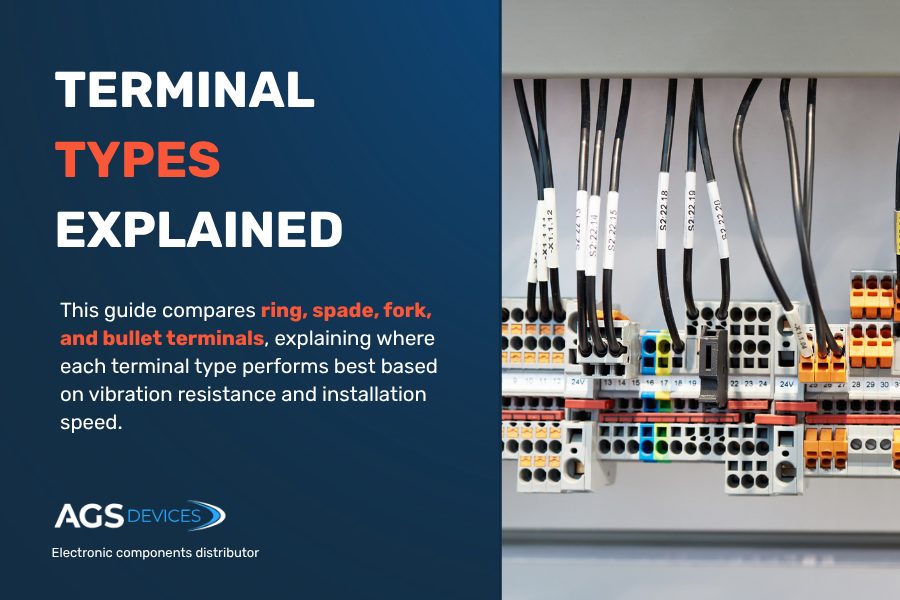
That’s why choosing the right terminal type is critical. Ring, spade, fork, and bullet terminals are all designed for different connection methods, installation needs, and operating environments.
Some prioritize maximum vibration resistance, while others are optimized for quick servicing and fast replacement.
For engineers, terminal selection directly affects electrical reliability, maintenance efficiency, and long-term performance.
In this guide, we’ll cover:
- The most common electrical terminal types and how they differ
- Ring, spade, fork, and bullet terminal applications
- Advantages and limitations of each design
- Material and insulation considerations
- How to choose the right terminal for your application
Why Different Terminal Types Exist in Electrical Systems
Not all electrical connections face the same conditions. Some terminals need to withstand constant vibration, others must allow fast maintenance access, and some are designed for compact, detachable wiring.
Different terminal designs are engineered to solve different practical challenges within electrical systems, including:
- Connection security in high-vibration environments
- Faster installation and servicing
- Easier wire replacement and maintenance
- Reliable detachable connections for modular systems
The most common terminal types include:
- Ring terminals: Permanent, highly secure connections
- Spade terminals: Faster installation and removal
- Fork terminals: Easier servicing without complete screw removal
- Bullet terminals: Quick-connect detachable wiring solutions
In practice, the terminal type affects far more than connectivity alone, it also impacts maintenance speed, safety, and long-term reliability.
Ring, Spade, Fork, and Bullet Terminals Explained
Different electrical terminal types are designed to solve different connection challenges. Some prioritize maximum connection security, while others focus on faster installation, easier maintenance, or detachable wiring. Selecting the right terminal depends on the operating environment, vibration exposure, and servicing requirements.
Why Are Ring Terminals Used in High-Vibration Systems?
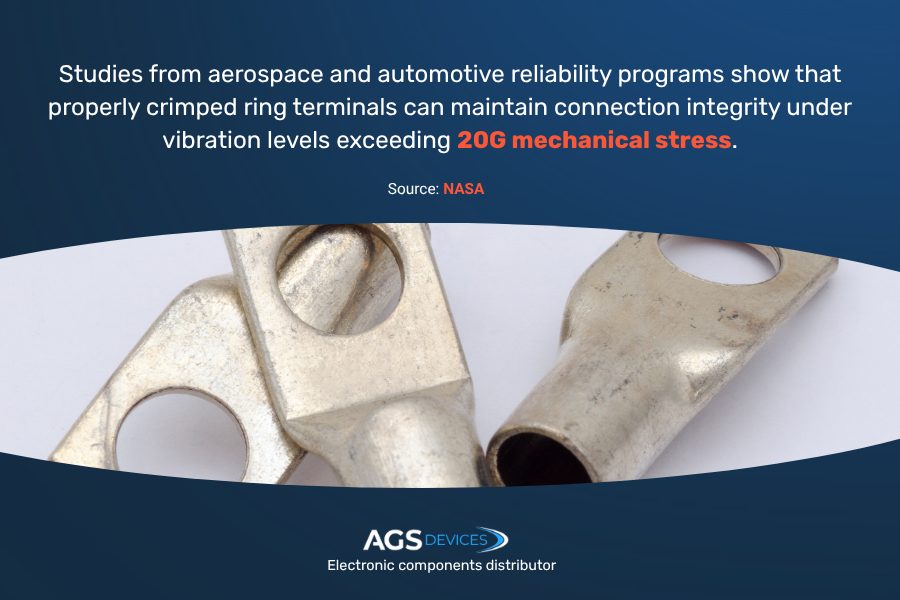
Ring terminals feature a closed circular design that fastens completely around a screw or stud, creating one of the most secure electrical connections available.
They are commonly used in:
- Automotive battery systems
- Grounding applications
- Industrial machinery
What makes ring terminals useful is their ability to stay mechanically secure, even under vibration.
Spade Terminals: Faster Connections for Easier Maintenance
Spade terminals use an open-ended U-shaped design that slides under a screw or terminal point, allowing quicker installation and removal than ring terminals.
They are widely used in:
- Control panels
- Switches and relays
- Serviceable electrical systems
Since they’re easier to remove and reconnect, spade terminals help reduce maintenance time during servicing.
Need Faster Field Servicing? Fork Terminals Simplify the Process
Fork terminals are similar to spade terminals but feature a wider opening that allows technicians to loosen a screw partially instead of removing it completely.
That’s why they’re often used in:
- Industrial maintenance applications
- Field-service equipment
- Systems requiring regular adjustments
Their design improves service efficiency while maintaining stable electrical contact.
Bullet Terminals: Built for Quick-Connect Wiring
Bullet terminals use a cylindrical male-and-female connection design that supports fast connection and disconnection.
You’ll typically see them in:
- Automotive wiring harnesses
- Consumer electronics
- Low-voltage modular systems
Their compact design works well in systems where wiring may need to be disconnected or replaced quickly.
Comparing Terminal Types: Pros, Limitations, and Best Uses
Each terminal type is designed with a different priority in mind, whether that’s connection security, installation speed, or maintenance accessibility.
| Terminal type | Main strength | Limitation | Best application |
| Ring | Maximum connection security | Slower servicing | Automotive systems, grounding |
| Spade | Quick installation | Lower vibration resistance | Control panels, relays |
| Fork | Easier maintenance access | Lower retention strength | Serviceable systems |
| Bullet | Fast connect/disconnect | Moderate mechanical stability | Modular wiring and harnesses |
Comparison of common terminal types based on installation speed, vibration resistance, maintenance accessibility, and connection stability.
No terminal type is universally better, the right choice depends on the environment and servicing requirements.
The best choice depends on balancing:
- Electrical load requirements
- Mechanical stress and vibration
- Maintenance frequency
- Installation accessibility
Why Do Terminal Materials and Insulation Matter?
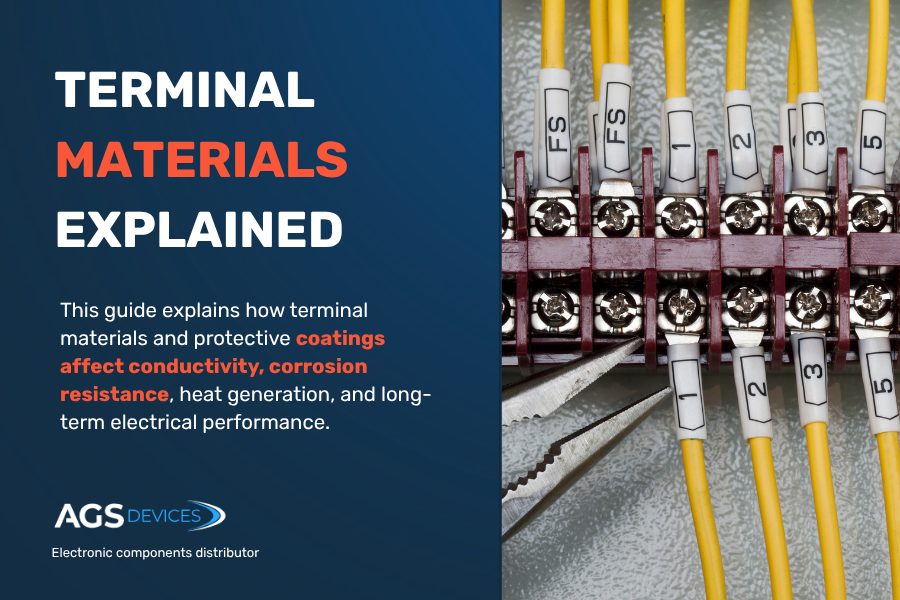
The performance of an electrical terminal depends on more than its shape or connection style. Materials, plating, and insulation all play a major role in determining how well a terminal handles current, heat, corrosion, vibration, and long-term wear.
At the core of every terminal is the conductive material itself. Copper remains the industry standard because of its excellent electrical conductivity, allowing efficient current transfer with minimal resistance.
Brass, while slightly less conductive, offers greater mechanical strength and durability, making it useful in applications exposed to repeated movement or stress.
Protective plating adds another layer of performance and reliability:
- Tin plating: Cost-effective protection against corrosion and oxidation
- Gold plating: Premium reliability with low oxidation and stable conductivity over time
Insulation is equally important, especially in exposed or high-vibration environments where accidental contact or moisture can create failure risks.
Common insulation options include:
- Non-insulated terminals: Used in protected or enclosed systems
- PVC insulated terminals: General-purpose electrical protection
- Heat-shrink insulated terminals: Enhanced sealing and strain relief for harsh environments
The right insulation helps protect against:
- Moisture and contamination
- Short circuits and accidental contact
- Mechanical stress and vibration damage
In demanding applications, material and insulation choices can significantly affect terminal lifespan, conductivity stability, and overall system reliability.

Get Reliable Components from AGS Devices
Selecting the right terminal type is about more than making a connection, it’s about ensuring long-term electrical reliability, easier maintenance, and safe system operation.
At AGS Devices, we help engineers, technicians, and procurement teams source terminal solutions designed for real-world operating conditions.
From industrial automation and automotive systems to electronics and power distribution, we provide access to reliable terminal types that meet demanding electrical and mechanical requirements.
We support your terminal sourcing needs with:
- Global sourcing network: Access to trusted and verified manufacturers
- Certified components: Quality-tested and fully traceable terminals
- Hard-to-find components: Including obsolete and allocation-constrained parts
- BOM optimization: Reduce sourcing complexity and improve procurement efficiency
- Quality assurance: Components selected for reliability and long-term performance
By combining technical expertise with global sourcing support, AGS Devices helps you reduce connection failures, improve serviceability, and maintain reliable electrical performance across applications.
Terminal Types: FAQs
What are the different types of electrical terminals?
The most common electrical terminal types include ring terminals, spade terminals, fork terminals, and bullet terminals. Each type is designed for specific connection methods, maintenance needs, and operating environments.
What are ring terminals used for?
Ring terminals are used in applications requiring secure, vibration-resistant connections. They are commonly found in automotive battery systems, grounding connections, and industrial machinery.
What is the difference between spade and fork terminals?
Spade terminals use a U-shaped opening for quick installation and removal, while fork terminals allow servicing without completely removing the fastening screw. Fork terminals are often preferred in systems requiring frequent maintenance.
What are bullet terminals used for?
Bullet terminals are used for quick-connect and detachable wiring applications. They are commonly found in automotive wiring harnesses, consumer electronics, and modular low-voltage systems.
Which terminal type is best for high-vibration environments?
Ring terminals are generally the best choice for high-vibration environments because their closed design provides stronger mechanical retention and reduces the risk of accidental disconnection.
Are insulated terminals better than non-insulated terminals?
Insulated terminals provide additional protection against moisture, short circuits, and mechanical stress. They are often preferred in exposed or demanding environments where long-term reliability is critical.
How do you choose the right terminal type?
Choosing the right terminal depends on electrical load, vibration exposure, maintenance requirements, wire gauge, and environmental conditions. The terminal should match both the electrical and mechanical demands of the application.
What causes terminal connection failures?
Terminal failures are commonly caused by loose connections, corrosion, poor crimping, overheating, and vibration. These issues can increase resistance and lead to intermittent electrical faults or system failure.
How does AGS Devices support terminal sourcing?
AGS Devices provides access to trusted global suppliers, helping customers source high-quality terminal types that meet performance, reliability, and compliance requirements across industries.
Can AGS Devices source hard-to-find or obsolete terminals?
Yes. AGS Devices specializes in sourcing hard-to-find, obsolete, and allocation-constrained terminal types to help customers maintain production continuity and reduce downtime.