
Terminal Materials: Key Takeaways
- Terminal material directly affects performance: Conductivity, corrosion resistance, heat generation, and mechanical durability all depend on the material and plating used
- Copper, brass, and plated terminals serve different purposes: Copper maximizes conductivity, brass improves mechanical strength, and tin plating enhances corrosion resistance
- Environmental conditions matter as much as electrical load: Moisture, vibration, heat, and oxidation all influence which terminal material performs best long term
- Choosing the right material improves reliability and lifespan: Matching terminal materials to the application helps reduce resistance buildup, maintenance issues, and premature connection failure
Copper accounts for roughly 60% of global electrical applications because of its exceptional conductivity and reliability in power systems.
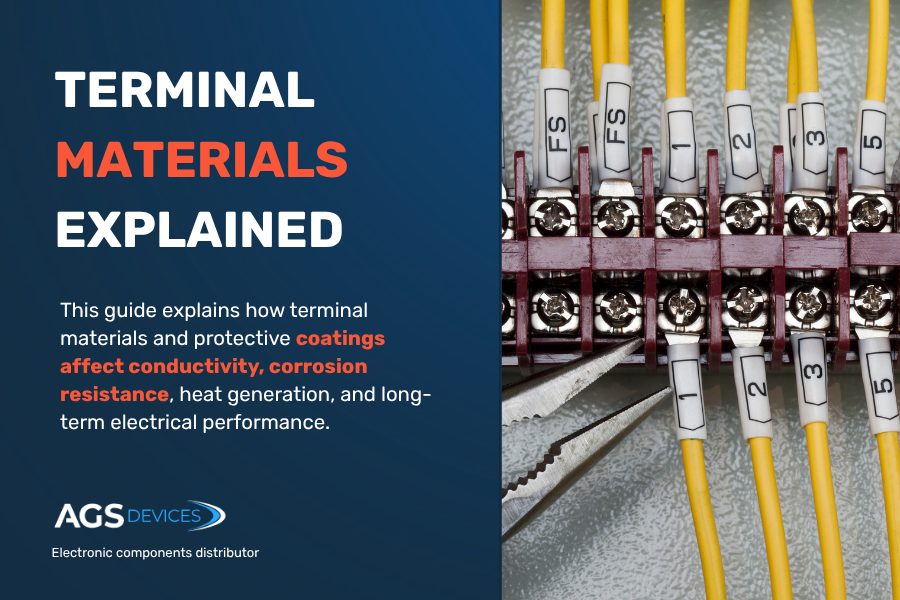
Conductivity matters, but terminal material also affects corrosion resistance, mechanical strength, heat generation, and long-term durability. Copper is often chosen for conductivity, brass for mechanical strength, and protective coatings like tin plating for corrosion resistance.
In this guide, we’ll cover:
- Common terminal materials and coatings
- Copper vs. brass terminal performance
- The role of tin plating and corrosion resistance
- How to choose the right material for your application
Why Terminal Material Matters More Than Most People Think
On the surface, most terminals don’t look very different. But the material underneath the surface can dramatically change how a terminal performs over time.
In practice, terminal material influences things like:
- Electrical conductivity
- Heat generation and resistance
- Corrosion behavior
- Mechanical durability
- Long-term reliability
A terminal used in a high-current industrial system faces very different demands than one used in consumer electronics or outdoor equipment. In some environments, conductivity is the top priority. In others, resistance to vibration, moisture, or oxidation matters more.
Copper, Brass, Tin-Plated, and More: How Terminal Materials Affect Performance
Different terminal materials are designed to solve different electrical and mechanical challenges.
Why Are Copper Terminals the Industry Standard?
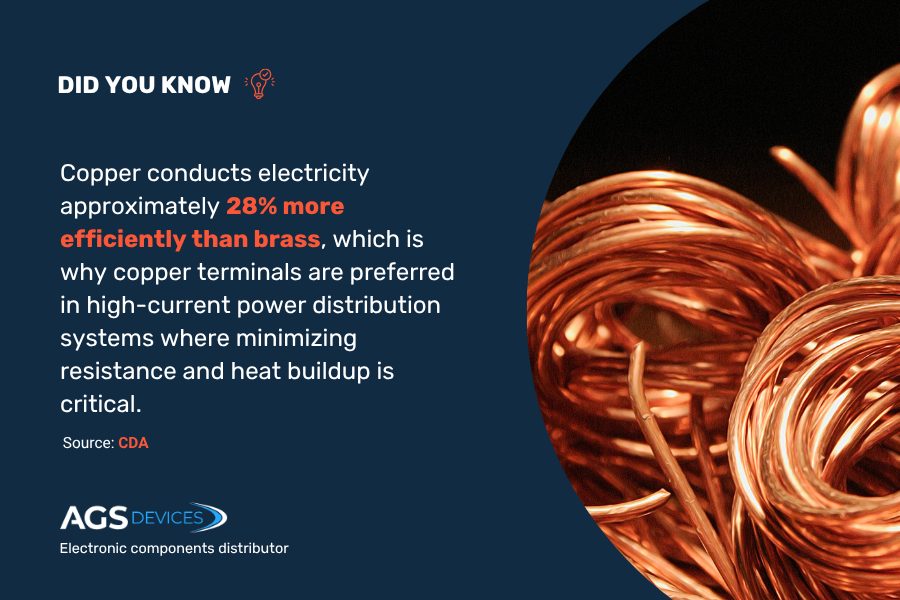
Copper terminals are widely used because of their exceptional electrical conductivity and low resistance. They allow current to flow efficiently while minimizing heat buildup, making copper ideal for high-current and power-distribution applications.
You’ll usually see copper terminals in:
- Automotive wiring systems
- Grounding applications
- Industrial power distribution
- Electrical panels and switchgear
Copper is typically chosen because it offers:
- Excellent electrical conductivity
- Strong thermal performance
- Reliable current handling under load
However, copper is softer than some other metals and can oxidize over time if left unprotected.
Brass Terminals: When Mechanical Strength Matters More
Brass terminals are made from a copper-zinc alloy that provides greater mechanical strength and wear resistance than pure copper. While brass is less conductive, it performs well in applications where durability and fastening stability are priorities.
Brass tends to perform better in applications like:
- Screw terminals
- Mechanical fastening systems
- Connector housings
- High-cycle connection points
What makes brass useful is its ability to handle:
- Better mechanical durability
- Improved wear resistance
- Stronger thread retention
Because of this balance between conductivity and strength, brass is often selected for terminals exposed to repeated servicing or mechanical stress.
What Does Tin Plating Actually Do?
Tin plating is one of the most common protective coatings used on electrical terminals. Rather than improving conductivity dramatically, its main purpose is to protect the base metal from corrosion, oxidation, and environmental degradation.
Tin plating is commonly used to:
- Improve corrosion resistance
- Reduce oxidation buildup
- Maintain stable electrical contact
- Improve solderability
- Provide cost-effective environmental protection
They are widely used in automotive systems, consumer electronics, and industrial equipment where moisture or oxidation could weaken electrical connections over time.
Other Terminal Materials and Protective Coatings
While copper, brass, and tin-plated terminals are the most common, some applications require specialized materials and coatings to handle extreme operating conditions, higher electrical loads, or long-term reliability demands.
Gold-Plated Terminals: Built for High-Reliability Connections
Gold plating is used in applications where maintaining a stable, low-resistance connection is critical over long periods of time. Because gold resists oxidation extremely well, it helps preserve signal integrity and consistent electrical contact even in sensitive electronic systems.
Gold plating is usually reserved for systems like:
- High-precision electronics
- Aerospace and defense systems
- Telecommunications equipment
- Signal and low-voltage applications
Their main advantages include:
- Premium corrosion resistance
- Stable low-resistance contact
- Excellent long-term reliability
Nickel-Plated Terminals: Improved Heat and Wear Resistance
Nickel plating is often used in environments exposed to high temperatures, friction, or repeated mechanical contact. It provides a hard protective surface that improves durability and wear resistance.
Nickel-plated terminals are typically found in:
- Industrial systems
- High-temperature environments
- Heavy-duty connectors and fastening systems
Key benefits include:
- Strong heat resistance
- Improved wear protection
- Better durability under mechanical stress
Silver-Plated Terminals: Maximum Conductivity for High-Power Systems
Silver offers some of the highest electrical conductivity of any metal used in terminal manufacturing. Because of this, silver-plated terminals are often selected for high-current and high-performance electrical systems where minimizing resistance is critical.
They are commonly used in:
- High-current power systems
- Industrial power distribution
- Energy infrastructure and switchgear
Their main advantage is:
- Extremely high conductivity for efficient current transfer
However, silver plating is typically more expensive and may require additional protection in certain environments.
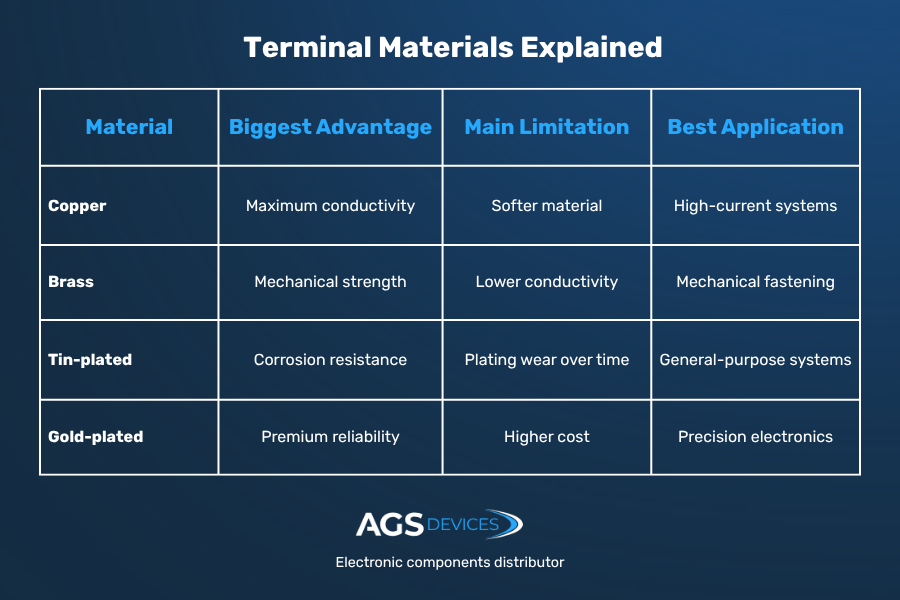
Terminal Material Comparison Table
| Material/Coating | Main Benefit | Common Use |
| Copper | High conductivity | Power systems |
| Brass | Mechanical durability | Screw terminals |
| Tin-plated | Corrosion protection | General electronics |
| Gold-plated | Premium reliability | High-precision electronics |
| Silver-plated | Maximum conductivity | High-current systems |
Copper vs. Brass vs. Tin-Plated: Which Terminal Material Is Best?
There’s no universal “best” terminal material. The right choice depends on how the terminal will perform under electrical load, vibration, environmental exposure, and long-term operating stress.
Some materials prioritize maximum conductivity, while others focus on mechanical durability or corrosion resistance. The challenge is balancing these tradeoffs based on the environment and load requirements.
Copper is typically preferred when electrical efficiency and current handling are the highest priorities. Brass performs better in applications requiring stronger mechanical retention and durability, especially where terminals experience repeated servicing or fastening stress.
Tin-plated terminals provide a balanced solution for many environments by helping resist corrosion and oxidation while maintaining reliable electrical contact.
In practice, material selection depends on balancing:
- Electrical conductivity and resistance
- Mechanical durability under stress
- Environmental resistance to moisture and corrosion
- Cost, maintenance requirements, and expected lifespan
How Can AGS Devices Help You Source the Right Terminal Materials?
Selecting the right terminal material is about more than conductivity alone. Long-term reliability depends on balancing electrical performance, corrosion resistance, mechanical durability, and environmental protection based on the demands of the application.
At AGS Devices, we help engineers, manufacturers, and procurement teams source terminal solutions designed for real-world operating conditions.
Whether your application requires the high conductivity of copper, the durability of brass, or the corrosion resistance of tin-plated terminals, we provide access to reliable components that meet both technical and supply chain requirements.
AGS Devices supports your sourcing needs with:
- Global sourcing network: Access to trusted terminal and connector manufacturers worldwide
- Certified components and excess material acqusition: Quality-tested and fully traceable materials and coatings
- Hard-to-find products: Including specialty-plated and allocation-constrained terminals
- BOM optimization: Simplify procurement and reduce sourcing complexity
- Quality assurance: Components selected for long-term reliability and performance
From industrial automation and automotive systems to electronics and power infrastructure, AGS Devices helps ensure your terminals are built to perform reliably in demanding environments.
Terminal Materials: FAQs
What is the best material for electrical terminals?
The best terminal material depends on the application. Copper is preferred for maximum conductivity, brass is valued for mechanical durability, and tin-plated terminals are commonly used for corrosion resistance and general-purpose reliability.
Why are copper terminals commonly used?
Copper terminals are widely used because copper offers excellent electrical conductivity and low resistance. This makes copper ideal for high-current applications such as power distribution, grounding systems, and automotive wiring.
Are brass terminals conductive?
Yes, brass terminals are conductive, though not as conductive as pure copper. Brass provides a balance between electrical performance and mechanical strength, making it suitable for screw terminals and high-wear applications.
What does tin plating do on electrical terminals?
Tin plating helps protect terminals from corrosion, oxidation, and environmental damage. It also improves long-term contact stability and solderability in many electronic and industrial applications.
Which terminal material resists corrosion best?
Gold-plated terminals offer some of the best corrosion resistance because gold does not oxidize easily. Tin-plated terminals also provide strong corrosion protection for general-purpose electrical systems.
What are silver-plated terminals used for?
Silver-plated terminals are commonly used in high-current and high-performance power systems because silver provides extremely high electrical conductivity and efficient current transfer.
How does terminal material affect electrical performance?
Terminal material directly impacts conductivity, resistance, heat generation, and long-term reliability. Poor material selection can increase resistance and accelerate wear or corrosion over time.
Why is mechanical strength important in terminals?
Mechanical strength helps terminals withstand vibration, repeated servicing, and fastening stress. Materials like brass are often selected when durability and wear resistance are critical.
How do you choose the right terminal material?
Choosing the right material depends on current load, environmental exposure, vibration, temperature, and expected lifespan. The best material balances conductivity, corrosion resistance, durability, and cost for the application.
How does AGS Devices support terminal material sourcing?
AGS Devices helps customers source high-quality terminal materials and plated terminals through a global supplier network, supporting reliable electrical performance across industrial and electronic applications.